Facial Aesthetics Is Evolving
The world of injectable aesthetics continues to grow, and with that growth comes a shift in technique and philosophy. More injectors are moving away from treating isolated areas and are instead adopting strategies that consider the full facial structure. This broader perspective helps create results that look cohesive, balanced, and supportive of each individual’s natural anatomy.
What Facial Balancing Actually Means
Facial balancing focuses on evaluating the face as a unified whole. Rather than treating a single concern in isolation, injectors assess how each feature relates to the others. This includes understanding:
- Height, width, and proportion
- Contour and projection
- Soft tissue dynamics
- The underlying interplay of bone, fat pads, and muscle
This global approach supports natural-looking outcomes that complement the individual’s inherent structure.
Why Full Face Strategies Are Becoming More Common
Injectors who integrate facial balancing into their practice often find that it allows them to achieve:
- Enhancements that look harmonious rather than isolated
- Improved longevity in treatment plans
- More predictable, consistent outcomes
- A reduced risk of overcorrection
- Greater overall satisfaction from patients
By prioritizing proportion and structure, practitioners can elevate their aesthetic artistry and deliver results that align with modern best practices.
What This Guide Covers
This educational resource will explore the core components of facial balancing, including:
- Facial anatomy fundamentals
- Aesthetic philosophy and proportional analysis
- Foundational ratios and measurement systems
- Multi-zone treatment planning
- Common mistakes and how to avoid them
- Case strategy and sequencing
- Advanced training pathways for injectors
The goal is to provide a structured understanding of what it means to treat harmony rather than individual features, supported by evidence-based techniques and thoughtful assessment.
The Art and Anatomy of Facial Balancing
True facial harmony cannot be achieved by focusing on a single area. Every part of the face influences the others. Lips look small when the chin retrudes. Cheeks look flat when the temples are hollow. The jawline appears soft when midface support is weak.
A global assessment approach stays grounded in anatomy, including:
1. Skeletal Structure
The bone structure is the architectural foundation of the face. Facial balancing must evaluate:
- Chin projection
- Mandibular angle
- Zygomatic width
- Pyriform aperture and anterior maxilla
- Frontal bone and brow position
If skeletal support is weak, simply adding soft tissue filler to one area will not create true balance.
2. Fat Pad Volume and Distribution
Fat pads shift naturally with age. The midface descends, the temples hollow, and the jawline loses definition. Understanding these changes helps injectors determine where structural support is most needed.
3. Musculature and Dynamic Movement
Balance relies on both static shape and dynamic motion. Asymmetries often reveal themselves during expression. Injection plans should account for:
- Muscle dominance
- Uneven smile pull
- Brow hyperactivity
- Chin mentalis strain
- Platysma pull
Dynamic neuromodulation becomes an essential tool.
4. Skin Quality
Even the best contours can be overshadowed by poor skin quality or laxity. Facial balancing often integrates:
- Biostimulators
- Microneedling
- Chemical resurfacing
- Collagen induction
When structure and skin quality align, balance becomes effortless.
Why Isolated Feature Enhancement Fails Most Patients
Many patients arrive asking for one feature to be treated. They want bigger lips, a sharper jawline, fuller cheeks, or fewer lines around the eyes. But isolated enhancements often make the face appear:
- Unnatural
- Heavy
- Overdone
- Imbalanced
A better injector response is often: The area you want treated may not be the area that needs correction.
For example:
- If the chin is retruded, the lips look disproportionately large.
- If the midface lacks volume, tear trough filler may look puffy.
- If the temples are hollow, the brows appear heavy or aged.
- If the jawline lacks posterior support, the neck appears fuller.
Most “problem areas” are actually symptoms of deeper structural imbalance.
Creative Aesthetic Ratios That Guide Facial Balancing
Facial balancing is both science and art. Ratios provide guidance, not rigid rules, but they help injectors educate patients and design their treatment plan.
Vertical Thirds
The face should be divided into three equal proportions:
- Hairline to brow
- Brow to base of nose
- Base of nose to chin
If the lower third is short due to a weak chin, lips often look overfilled by comparison.
Horizontal Fifths
The face can be viewed as five equal vertical sections. When one section deviates, it can create perceived asymmetry. This is useful for:
- Temple contouring
- Forehead balancing
- Jawline width assessment
- Cheek projection planning
Facial Width to Height Ratio
Balance depends on whether a face is more heart-shaped, oval, round, or square. Injectors must respect natural phenotype.
Chin Projection and Pogonion Alignment
The chin should ideally align vertically with the lower lip and nose. This is a cornerstone of proper balancing work.
Lip Ratios
Classic lip ratios include:
- Upper to lower lip ratio
- Philtrum length
- Vermilion border support
- Lateral lip fullness
Correcting the chin often improves lip ratios without touching lip filler at all.
Jawline to Midface Relationship
A structured midface elevates tissues upward, reducing the need for excessive jawline filler.
These ratios serve as tools to help injectors communicate and strategize global treatment with clarity.
Where Full Face Enhancement Begins: The Consultation That Changes Everything
Facial balancing starts long before the first syringe is opened. The consultation is the moment to establish trust and educate patients on why global planning leads to superior results.
Strong consultations include:
1. A Thorough Visual Assessment
Patients should be observed in:
- Rest
- Smile
- Frown
- Raising brows
- Side profile
- Three-quarter view
2. A Collaborative Conversation
Patients often do not know what they truly need. They only know what bothers them. Providers can gently redirect their focus by explaining structural relationships.
3. Goal Setting
Global treatment is a process that considers the face as an interconnected system rather than a collection of individual areas. Because multiple zones (such as the temples, midface, lips, chin, and jawline) often interact, achieving proper balance typically cannot be accomplished in a single session. Staged treatments allow injectors to carefully assess results, make adjustments, and gradually build harmony across the entire face. This approach also helps manage swelling, refine subtle asymmetries, and provide patients with natural, lasting outcomes.
4. Photography
Photos help demonstrate:
- Before and after
- Left versus right discrepancies
- Contribution of the chin, midface, or temples to overall appearance
5. Budget and Timeline Planning
A multi-session approach is often more effective and easier for patients to manage financially.
Zones of Balance: The Areas That Transform a Face When Treated Together
These are key zones that injectors evaluate during a global assessment.
Midface: The Keystone of Facial Support
The midface affects:
- Under-eye hollowing
- Nasolabial lines
- Cheek shape
- Facial height
- Jawline heaviness
Strengthening the midface often reduces the need for additional filler in other areas.
Chin and Jawline: The Lower Third That Defines Balance
Chin projection influences:
- Lip size perception
- Neck contour
- Jawline sharpness
- Overall symmetry
Jawline contouring must consider both anterior and posterior width to remain natural.
Temples: The Most Underrated Area in Facial Balancing
Temple hollowing contributes to:
- Dropped brows
- Aging around the eyes
- Hairline heaviness
- Facial width imbalance
Correcting the temples often creates an instant youthful appearance.
Lips: More Effective When Treated in Context
Lip balancing must include:
- Chin
- Teeth show
- Philtrum length
- Lower facial height
- Nasal projection
This is why advanced injectors treat lips last, not first.
The Biggest Mistakes Injectors Make With Facial Balancing
Even experienced injectors can fall into common pitfalls, such as:
- Overfilling isolated areas: This causes distortion and volume imbalance.
- Ignoring skeletal deficiencies: Without structure, filler creates a heavy look.
- Treating symptoms instead of causes: Tear troughs often do not need filler. The midface does.
- Not assessing dynamic movement: Muscle dominance or asymmetry must be understood before filler placement.
- Using the same technique for every patient: Male, female, gender-neutral, youthful, mature, and ethnic faces all require different philosophies.
These mistakes are fully correctable when injectors receive advanced, hands-on education.
Building a Blueprint: How Injectors Create Their Facial Balancing Treatment Plan
A complete facial plan includes:
Stage 1: Structural Foundation
Often includes:
- Chin
- Jawline
- Midface
- Temples
Stage 2: Soft tissue refinement
Includes:
- Lips
- Under eye
- Marionette lines
- Fine-tuning asymmetries
Stage 3: Neuromodulators
Used to balance:
- Brow position
- Smile dynamics
- Mentalis strain
- Masseter hypertrophy
- Platysma banding
Stage 4: Skin quality
Biostimulators or resurfacing maintain long-term harmony.
How Education Shapes the Injector’s Ability to Balance a Face
Facial balancing is not a beginner’s skill. It requires:
- Deep knowledge of anatomy
- Safe needle and cannula execution
- Ratio mastery
- Global vision
- Artistic intention
- Hands-on training
For injectors who want to move into advanced work, structured training is essential.
Elevate Your Skills With Advanced Facial Balancing Training at DCCM Academy
Facial balancing is one of the most sought-after skills in aesthetics today. It allows injectors to create natural, durable, and harmonious results that build patient loyalty and grow thriving practices. This level of artistry cannot be learned through isolated techniques or self-study alone. It requires structured guidance, live models, anatomical application, and mentorship.
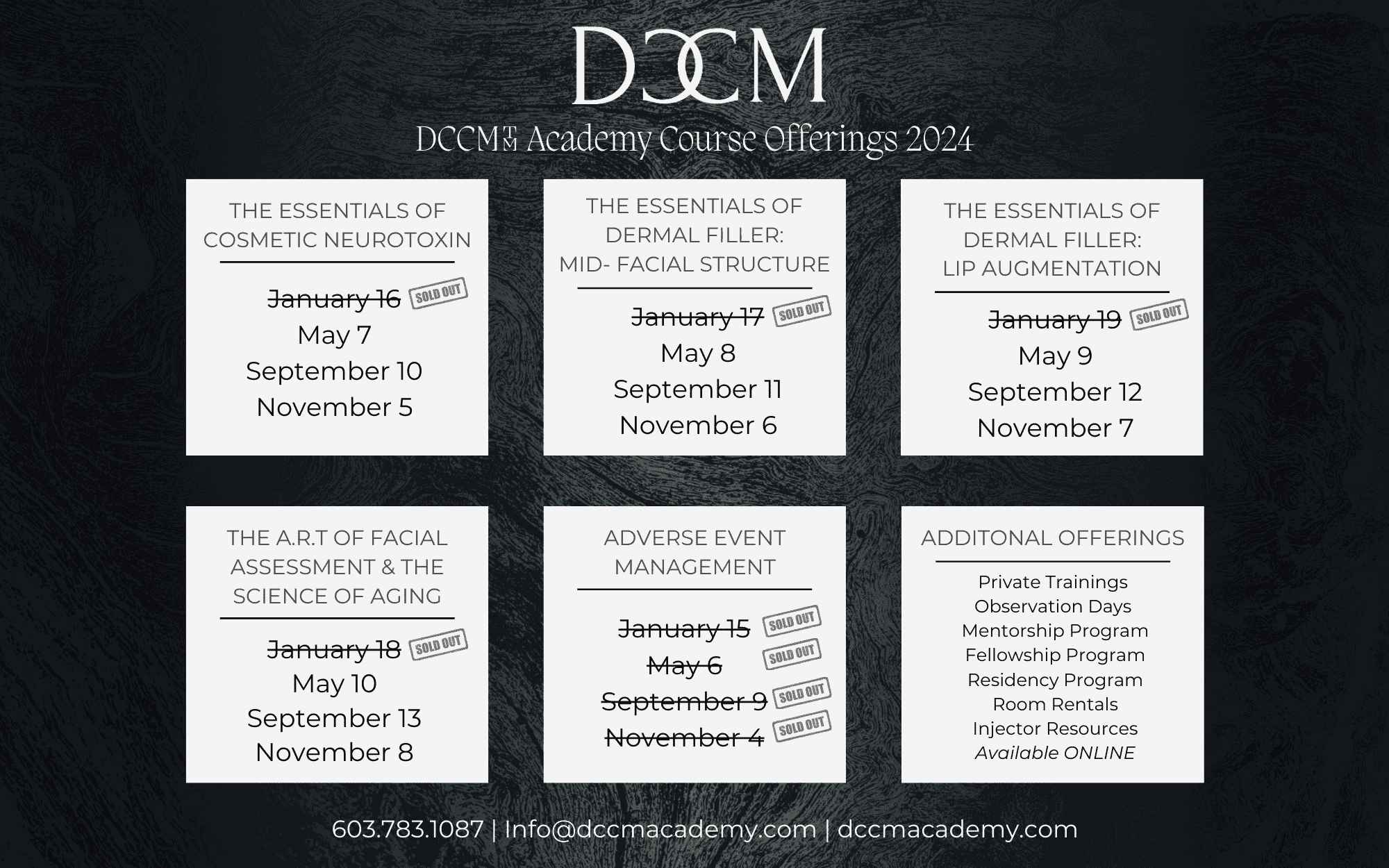
If you are ready to deepen your skills, consider enrolling in:
DCCM Academy’s Advanced Facial Balancing Course
Learn how to analyze facial ratios, create multi-zone plans, layer structure and refinement, and treat harmony rather than isolated features.
Advanced Filler Training
Strengthen your cannula and needle skills through hands-on instruction that supports safe, confident full-face treatment.
Cosmetic Neurotoxin Course
Understand dynamic movement, muscle balance, and how neuromodulators contribute to global harmony.
Private Training and Shadowing
A customized experience tailored to your learning goals, patient challenges, and skill development.
DCCM Academy helps injectors move beyond single-feature enhancement into truly transformative aesthetic artistry. Facial balancing is the hallmark of an advanced injector, and with proper training, you can deliver results that elevate both your practice and your patient outcomes.
2024 Course listings