Delivering safe, natural, and satisfying results is the cornerstone of modern aesthetic medicine. Yet, even in the hands of a skilled injector, botched injectable treatments can occur, leading to preventable complications and poor outcomes. As demand for non-surgical facial rejuvenation continues to grow, so does the responsibility of every provider to prioritize patient safety, uphold ethical standards, and seek ongoing education.
At DCCM Academy, our mission is to empower injectors at every stage to master their craft and minimize risks. If you are committed to elevating your skills and safeguarding your patients, this comprehensive guide will help you understand what can go wrong, why it happens, and most importantly, how to prevent it. Explore our injector training programs early in your journey to maximize patient outcomes and professional satisfaction.
Understanding Poor Outcomes in Aesthetic Injectables
Not every less-than-ideal result qualifies as a “botched” case, but all complications deserve careful attention and continuous learning. In aesthetic injectables, poor outcomes refer to results that fall short of the intended aesthetic goals or cause distress, discomfort, or medical issues for the patient. Injectable complications can range from minor, temporary asymmetry to more serious issues such as vascular occlusion, infection, or persistent lumps. Recognizing the difference between minor aesthetic concerns and true medical complications is essential for every practitioner.
Common types of injectable complications include:
- Swelling and bruising exceeding the expected post-procedure course
- Irregular contours, lumps, or nodules (especially with fillers)
- Overcorrection or undercorrection
- Vascular compromise
- Unintended spread of neuromodulators
- Infections at the injection site
It is important to foster a clinical environment where providers feel comfortable discussing and reporting complications—this transparency is the foundation for quality improvement and patient safety.
Identifying Common Aesthetic Injector Mistakes Leading to Complications
Many aesthetic injector mistakes are preventable with the right preparation, training, and attention to detail. Understanding the most frequent sources of error can drastically reduce the likelihood of filler complications and other adverse outcomes:
- Inadequate patient assessment: Overlooking medical history, allergies, or contraindications can set the stage for preventable complications.
- Poor anatomical knowledge: Misjudging facial structure or injection planes increases risk for vascular injury or product misplacement.
- Improper technique: Injecting too superficially or too deeply, using the wrong product for the area, or exceeding safe volumes may all contribute to poor results.
- Lack of aseptic technique: Failure to maintain sterility can lead to infections.
- Inadequate communication: Not clarifying patient expectations or potential risks can result in dissatisfaction or legal issues.
By reflecting on these common injector mistakes in aesthetics, providers can proactively refine their approach and enhance patient safety.
Mastering Anatomy for Uncompromised Injection Safety
The importance of anatomy in injectables cannot be overstated. Every successful, complication-free treatment starts with a deep understanding of facial vasculature, nerve pathways, fat compartments, and the unique structural differences in each patient. Providers who continually refresh their anatomical knowledge are better prepared to avoid inadvertent intravascular injection, nerve injury, and product migration.
Why Does Anatomy Matter So Much For Injection Safety?
- Prevents vascular complications: Knowing where major arteries and veins lie minimizes the risk of accidental injection, which can lead to tissue necrosis or even blindness.
- Ensures precise product placement: Understanding the depth and location of target tissues enables natural-looking, durable results.
- Facilitates early recognition of complications: Anatomical mastery allows for prompt identification and management of unexpected events during or after treatment.
Continuous anatomy education is critical. Explore our anatomy courses to deepen your expertise and foster confidence in your practice.
The Art of Patient Selection and Managing Expectations
Many poor outcomes stem not from technical error, but from misaligned expectations or inappropriate patient selection. Successful injectors understand that prevention of botched filler starts before the syringe comes out:
- Thorough consultation: Assess the patient’s medical and psychological health, past procedures, and motivations for seeking treatment.
- Set realistic expectations: Clearly explain what the chosen injectable can and cannot achieve, including limitations and possible side effects.
- Identify red flags: Be cautious with patients seeking dramatic, unrealistic changes or those with a history of body dysmorphia.
- Tailor treatment plans: Customize approach based on facial anatomy, age, gender, and lifestyle.
By taking time to educate and screen each patient, injectors can preempt dissatisfaction and reduce the risk of complications.
Avoiding Aggressive Techniques: The Path to Natural Results
Aesthetic trends can exert powerful influence on both patients and providers. However, following social media-driven standards or using aggressive techniques (such as overfilling lips or cheeks) can quickly lead to an unnatural appearance and increase the risk of complications. The pursuit of “the latest look” should never override principles of safety and anatomical harmony.
Risks of aggressive or trend-driven injecting include:
- Overfilling, which can distort facial proportions and lead to long-term tissue changes
- Increased risk of vascular compromise, especially when exceeding recommended filler volumes
- Higher rates of patient dissatisfaction as trends shift
A balanced, conservative approach (anchored in anatomy and patient-centered goals) serves both injector and patient. Providers should regularly revisit their technique and remain wary of pressure to deliver dramatic changes unless truly indicated.
Essential Skills for Complication Management in Injectables
No matter how skilled or careful an injector may be, complications may still arise. What distinguishes a competent provider is their preparedness and ability to manage these events swiftly and effectively. Robust complication management for injectors includes:
- Early recognition of signs and symptoms of vascular occlusion, infection, or allergic reaction
- Immediate access to reversal agents and emergency protocols
- Strong referral networks for multidisciplinary support when needed
- Ongoing documentation and follow-up care to ensure resolution
Developing these essential skills requires deliberate practice, simulation, and mentorship.
Elevating Practice Through Advanced Injector Training and Education
The field of aesthetic medicine is constantly evolving, with new products, techniques, and safety data emerging regularly. Advanced injector training is not just for beginners. Ongoing education is the key to minimizing risk and continuously improving patient outcomes.
Benefits of advanced injector education include:
- Mastery of new injection techniques and technologies
- Refined understanding of facial anatomy and complication avoidance
- Improved confidence in managing challenging cases
- Enhanced ethical standards and decision-making skills
Providers can explore options for advanced injectable education through intensive workshops, private training, and mentorship. Making education a priority is the surest way to prevent poor outcomes and to maintain your patients’ trust.
DCCM Academy: Raising Standards in Aesthetic Education
DCCM Academy is dedicated to setting new benchmarks for injector education and patient safety. Through a blend of evidence-based curriculum, experienced faculty, and a supportive learning environment, the Academy enables providers to master both the art and science of injectables. Our programs emphasize:
- In-depth anatomical education
- Practical, hands-on skills with expert supervision
- Ongoing access to mentorship and community support
- Ethical practice and patient-centered care
By choosing to invest in professional growth, injectors contribute to a culture of excellence and prevention that benefits the entire field of aesthetic medicine. Learn more about our upcoming injector training programs and anatomy courses.
Raising the Standard in Aesthetic Safety
Preventing botched injectable treatments is a shared responsibility that extends from individual injectors to the broader educational community. By prioritizing anatomy mastery, thoughtful patient selection, sound technique, and robust complication management, aesthetic professionals can elevate practice standards and deliver safer, more satisfying outcomes.
DCCM Academy is proud to support injectors on this journey with comprehensive resources and advanced training. Take the next step in your professional development and join a community dedicated to responsible aesthetics and patient safety.
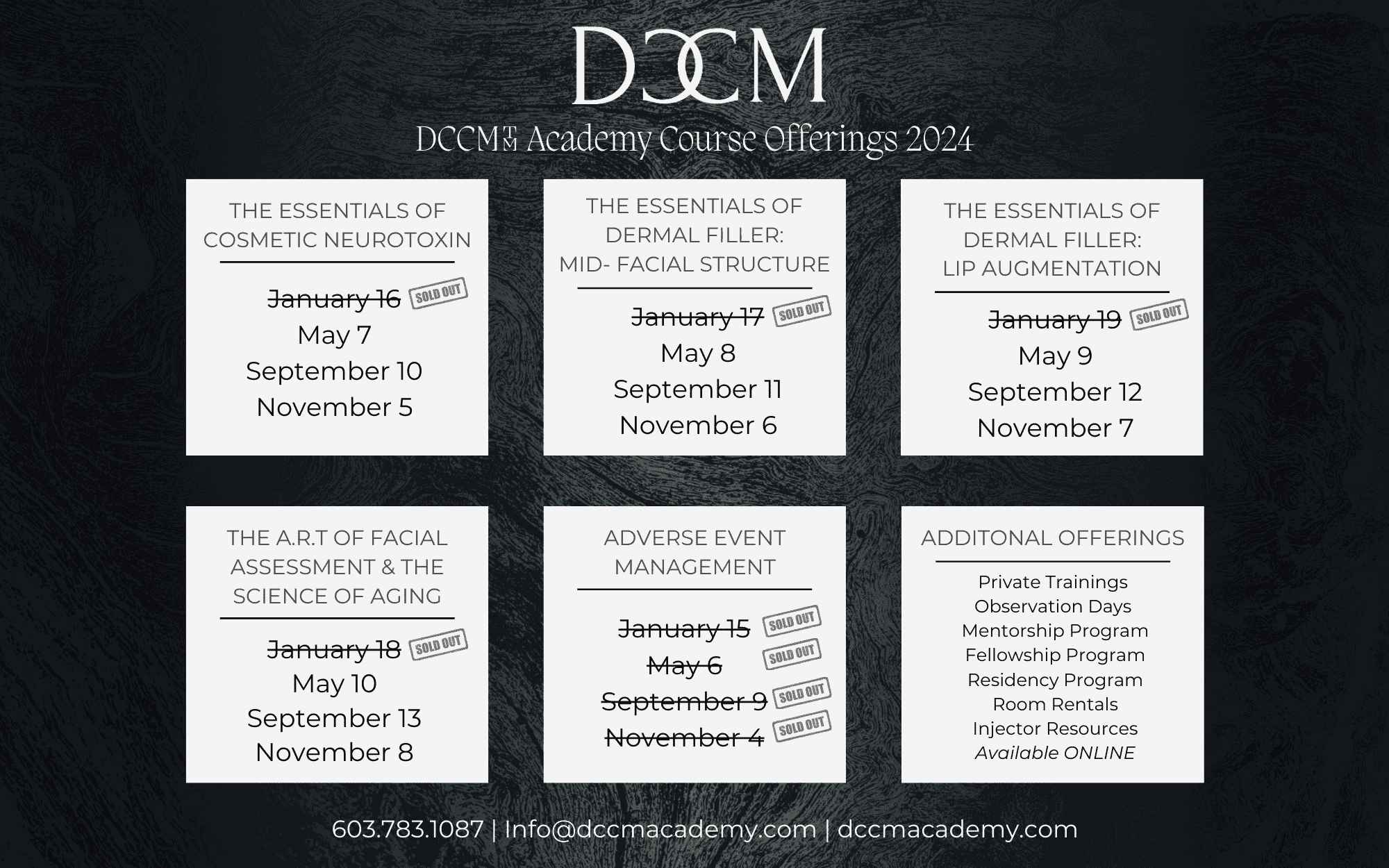
2024 Course listings